
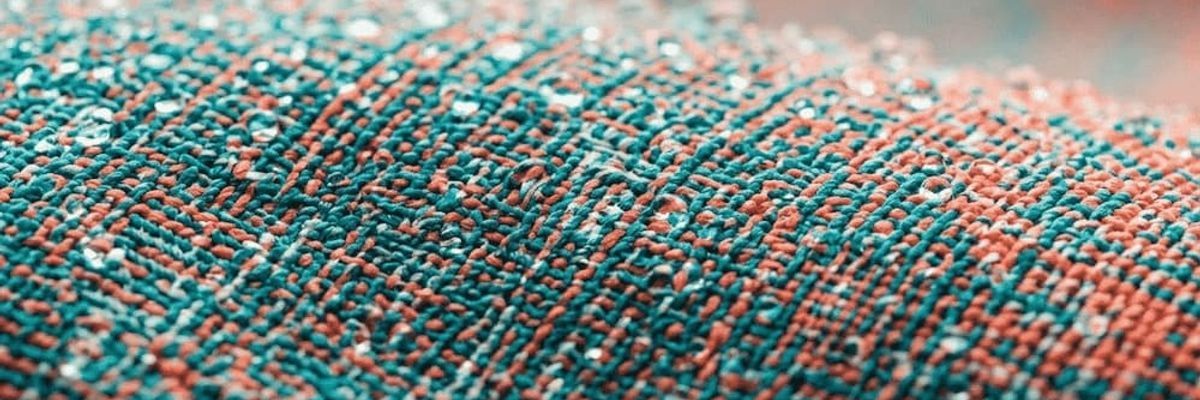
We often choose with our eyes. You spot a stunning shade, a trendy back cut-out, picture yourself on white sand — and the new piece is already in the basket.
But let's be honest. What good is a beautiful design if after two pool visits the fabric sags and the colour washes out in pale patches?
The Nova Vega team regularly tests dozens of material samples before launching each collection.
And we know for sure that the magic of a perfect fit isn't only in precise patterns. The secret to durability hides on the small white composition label.
Let's work out which fibres make pieces last for years and which give up after the very first holiday.
The basics: why we don't swim in cotton
Natural fabrics are ideal for summer heat. Cotton and linen breathe beautifully, but they're completely unsuitable for swimming.
When wet, natural fibre instantly soaks up water. The piece gets heavy, loses shape and takes forever to dry.
That's why the beach industry relies entirely on quality synthetics.
Modern man-made materials are light, they repel excess moisture and hug the body closely, creating a nice silhouette.
Polyamide vs polyester: who wins
Look at the composition of any quality beach set and you'll see one of two materials at the base. Each has its own strengths and jobs.
Polyamide — a second skin
It's a soft material that feels wonderful to the touch. It lies over the figure perfectly smooth and even.
Designers love polyamide because it holds bright, neon and saturated dyes brilliantly.
The fabric comes out thin, dries fast and looks luxurious in the sun. But it has a weakness — it doesn't much like harsh chemicals and constant friction.
Polyester — the tough fighter
It's slightly denser and a touch firmer to the touch. But polyester is nearly indestructible. It withstands blazing sun, salt and frequent washing.
If you're after a piece for active sport or daily water training, confidently choose styles high in polyester.
That elastane: why it's needed
On their own, neither polyamide nor polyester stretches. So you can actually put a piece on and move freely, elastic threads are added — elastane, spandex or lycra. These are different trade names for the same springy fibre.
The gold standard for elastane content is 15 to 20 percent. Less than that and the fabric is stiff and restricting. More and the piece stretches out fast and goes wavy.
It's this ideal ratio of stretch that makes functional pieces possible. For example, a quality tummy-control swimsuit works precisely thanks to the right balance of dense mesh and springy elastane fibres that lift the silhouette without discomfort.
Pool and chlorine: the hidden threat
Water parks and hotel pools are the main enemies of your beachwear. The chlorine used to disinfect the water mercilessly destroys thin elastane threads.
Ever noticed how fabric sometimes thins and turns loose, like an old elastic band? That's chlorinated water working together with high temperature.
If you plan to live in pools or love hot jacuzzis, look for fabrics marked chlorine resistant. Usually these are polyester-based blends with specially treated fibres. But even they need help.
We've written a detailed guide on how to care for a swimsuit so the harsh environment doesn't ruin your favourite pieces. The main rule is very simple — always rinse the piece in cool fresh water right after swimming.
How texture and composition affect the cut
Choosing the right fabric depends directly on the effect you want. Flat matte materials hide volume well.
Ribbed textured fabrics or glossy biflex, on the other hand, visually add roundness. If you want a nice accent at the neckline, look at styles with moulded cups. Read the article on what push-up swimwear is and who it's for to understand how firm inner pads work with proportions.
Once the fabric is right, all that's left is the format. The article one-piece or two-piece swimsuit: which is for you helps you settle on the base cut.
In our catalogue you'll find one-piece swimsuits in dense, supportive fabric that shape the figure beautifully. And if you prefer to mix styles, browse the two-piece swimsuits section. You can match any top with the perfect women's swim bottoms in the right cut.
Don't forget accurate measurements
Even the most high-tech premium fabric won't save you if you get the size wrong. Elastane stretches, but it has a limit. Over-stretched fabric thins twice as fast and turns semi-transparent when wet.
Do spend a couple of minutes with our guide swimsuit size: how to determine it + size chart before you order.
If you're unsure, or your measurements shift a little by season, a tie-side / oversize / three-piece swimsuit — what it is and who it suits is a great solution. Side laces let you control how snugly the fabric sits against the body yourself.
Building a functional wardrobe with Nova Vega
We create collections understanding what fabric faces in real conditions — from salty sea spray to sunscreen. In the about us section you can learn more about how we choose materials for the perfect fit.
To make your seaside look complete, don't forget the details. Round out your choice — browse ready beach sets and light, breathable tunics that protect your skin from the harsh midday sun.
FAQ
Does fabric fade in the sun?
Any fabric loses colour intensity over time under direct sun. But polyester resists UV noticeably better than polyamide. To keep colours bright, dry pieces in the shade, turned inside out.
Why does a swimsuit go transparent in water?
For two reasons — either the fabric is too thin with no dense lining, or you chose a size smaller than needed. Elastane over-stretched on the body shows through when wet.
Does the material protect against UV?
Most quality modern beach fabrics have a UPF 50+ rating. They work like strong sunscreen, blocking up to 98 percent of harmful rays where the fabric sits close to the body.
Can these pieces be machine washed?
We strongly advise against it. Aggressive drum spinning, wringing and washing powders break elastane fibres. Hand washing in cool water with mild soap is the best way to extend the life of your favourite set.
What if the fabric on the bottoms has turned rough?
This usually happens after sitting on a rough pool edge or rocks. The fibres simply abrade. Sadly, smoothness can't be restored, so always put a towel down before sitting on hard, uneven surfaces.


